Metal roofing and asphalt shingles rank as top choices for Jacksonville, Florida homes facing subtropical heat, salt air, and hurricane-season winds. E2 Roofing, a veteran- and woman-owned company serving North Florida, installs both materials along with tile and apartment roof systems, matching each home’s structure and budget to long-term durability.
Key Takeaways
- Asphalt shingles, metal roofing, and tile rank as the three most installed materials on Jacksonville homes.
- Subtropical climate demands roofing materials that withstand intense heat, humidity, and hurricane season conditions effectively.
- Quality roof installation directly impacts your home’s cooling costs, longevity, and weather protection capabilities.
- Professional contractor expertise ensures proper installation and maximizes your roofing material’s performance in Florida conditions.
What roof material handles Jacksonville’s climate best?
Jacksonville’s subtropical climate demands a roofing material that withstands high heat, humidity, salt air, and hurricane-season winds. The three materials installed most often on local homes are asphalt shingles, metal roofing, and tile. Each performs differently under Northeast Florida’s conditions.
How does salt air affect roofing choices?
Coastal neighborhoods like Jacksonville Beach, Atlantic Beach, and Neptune Beach face salt air that accelerates corrosion in some materials. Metal roofing requires specialized coatings to resist this degradation. Tile and asphalt shingles naturally hold up better against salt exposure without additional treatments.
Which material offers the best balance for Jacksonville homeowners?
| Material | Heat Resistance | Wind Performance | Salt Air Durability |
|---|---|---|---|
| Asphalt shingles | Moderate | Good with proper installation | Good |
| Metal roofing | Excellent (reflects heat) | Excellent | Requires protective coating |
| Tile | Excellent | Excellent (heavy, resists uplift) | Excellent |
Asphalt shingles provide a cost-effective option that handles Jacksonville’s humidity well when installed correctly. Metal roofing excels at reflecting heat, reducing cooling costs during summers that regularly push past 90 degrees Fahrenheit. Tile offers strong resistance to both wind uplift and salt corrosion, making it a solid option for coastal properties.
E2 Roofing has served Jacksonville with expertise across all three material types, including durable asphalt shingles, resilient metal roofs, and apartment roof systems designed for Florida’s conditions. The right choice depends on a home’s location, budget, and the homeowner’s priority between upfront cost and long-term durability. To establish legitimacy and trust with Florida homeowners, every material recommendation is grounded in local building codes and real-world climate performance rather than guesswork.
Asphalt vs metal vs tile: which wins in Jacksonville?
Jacksonville’s subtropical climate demands a roofing materials comparison that weighs durability against cost. The asphalt vs metal vs tile Jacksonville debate comes down to how each material handles heat, humidity, salt air, and wind across Duval County. Asphalt shingles remain the most common choice, but metal and tile each offer distinct advantages for local homeowners.
How long does asphalt last in Florida’s climate?
Most shingle roofs typically last 20-25 years. Florida’s conditions may require earlier replacement due to high winds and isolated hail events. E2 Roofing uses products from CertainTeed, an industry-leading producer of asphalt shingles, backed by both product and labor warranties.
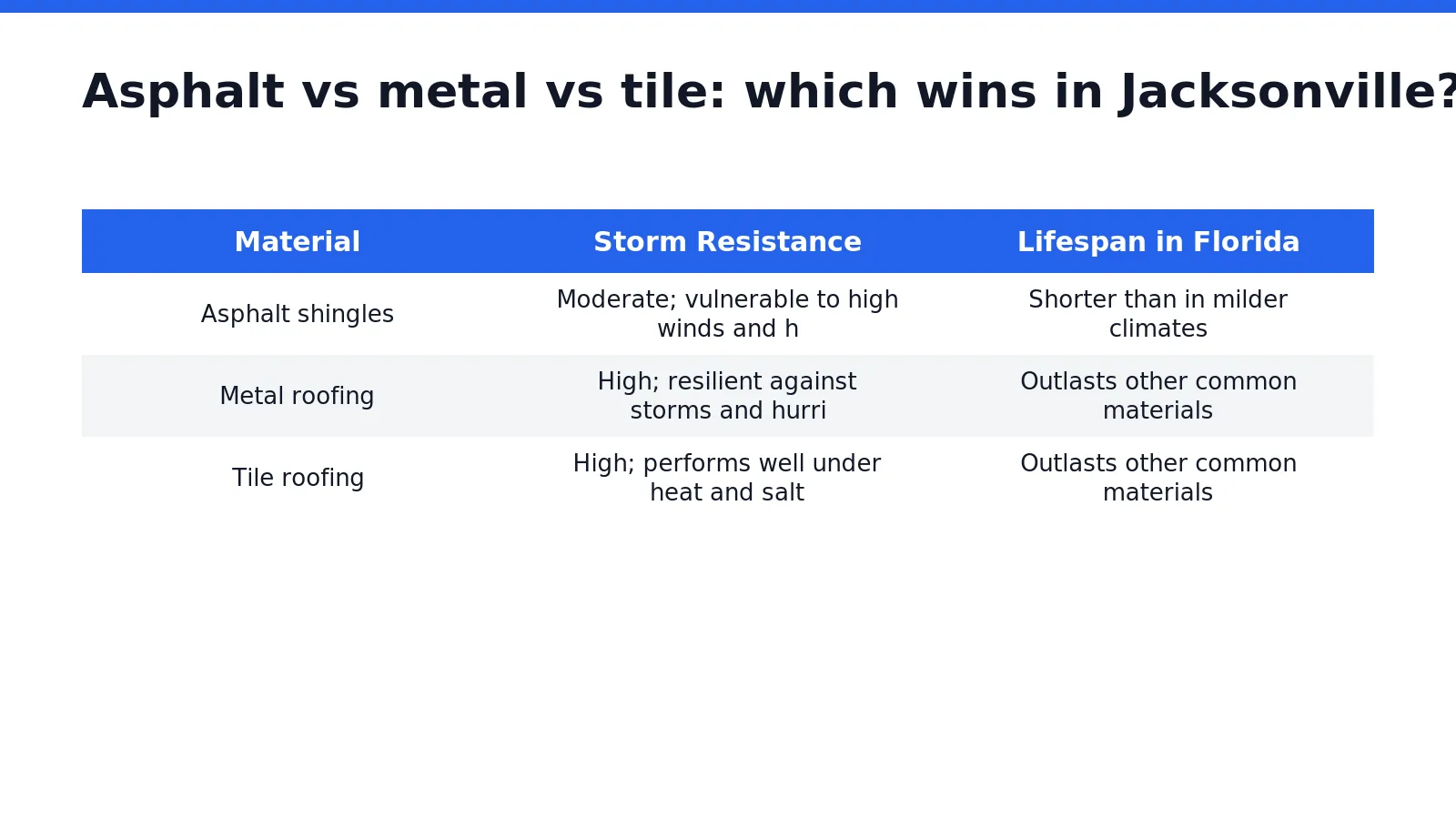
Which material stands up best to hurricanes?
| Material | Storm Resistance | Lifespan in Florida |
|---|---|---|
| Asphalt shingles | Moderate; vulnerable to high winds and hail | Shorter than in milder climates |
| Metal roofing | High; resilient against storms and hurricanes | Outlasts other common materials |
| Tile roofing | High; performs well under heat and salt air | Outlasts other common materials |
Metal roofing stands up best to Florida storms and hurricanes, making it a strong choice for homeowners seeking durability. Tile roofing also performs differently under heat, humidity, salt air, and wind, which makes it a common sight on Jacksonville homes. A proper roof material selection guide must account for these climate factors first.
How do you choose the best roof material for your home?
Choosing the right roof material for a Jacksonville home starts with understanding local building codes, insurance requirements, and HOA guidelines. A roof material selection guide for Florida must weigh how each option performs under the region’s heat, humidity, and hurricane-force winds. The best roofing material jacksonville homeowners choose depends on balancing durability, cost, and compliance with these local rules.
What role does a qualified contractor play in material selection?
A qualified contractor is essential for proper installation and remodeling. Florida building codes and insurance carriers both influence which materials a homeowner can use. A licensed and insured team with over 50 years of combined experience handles everything from finding and fixing leaks to replacing hail-damaged materials and completely overhauling old roofs. To highlight our unique customer-centric service differentiator, the team pairs that technical expertise with clear communication and free inspections at every step of the process. This ensures the chosen material meets all code and insurance standards.
When does a roof need replacement instead of repair?
Homeowners should watch for ceiling stains on interior walls, missing shingles, discoloration, or bald spots on the roof surface. These signs indicate the roof may need replacement rather than simple repair. A free inspection identifies areas of concern. Helps determine whether the current material can be salvaged or if a new roofing materials comparison is needed.
How do HOA guidelines affect material choice?
Many Jacksonville neighborhoods have HOA rules that restrict roof color, texture, or material type. A what roof lasts longest in florida decision must also satisfy these aesthetic requirements. The asphalt vs metal vs tile jacksonville comparison shows each material offers different profiles that may or may not meet HOA standards. Working with a contractor familiar with local HOAs prevents costly rework after installation.
FAQ
What is the best roofing material for Jacksonville homes?
Asphalt shingles, metal roofing, and tile rank as the top three materials for Jacksonville homes. Each handles the subtropical heat, humidity, salt air, and hurricane-season winds differently. E2 Roofing matches material to each home’s structure and budget.
Does metal roofing hold up in Jacksonville’s coastal salt air?
Metal roofing excels at reflecting heat and performs excellently in wind. It requires specialized protective coatings to resist salt air corrosion in coastal areas like Jacksonville Beach and Atlantic Beach.
How long do asphalt shingle roofs last in Jacksonville?
Most shingle roofs last 20-25 years, though Florida’s high winds and isolated hail events shorten that timeline. E2 Roofing installs CertainTeed asphalt shingle products built for these conditions.
Conclusion
In closing, selecting the right roofing material for your Jacksonville home requires balancing durability, climate resilience, and long-term value. The best choice depends on your specific needs, budget, and aesthetic preferences—factors our team understands deeply after years of serving North Florida homeowners. Whatever material you choose, investing in quality installation and professional maintenance protects your home and provides the peace of mind you deserve in our subtropical climate.