When it comes to cool roof incentives, florida property owners upgrading to cool or reflective roofing systems qualify for federal energy efficiency tax credits covering 30% of costs, up to $1,200 for qualifying improvements, plus additional rebates and insurance discounts. E2 Roofing, serving Jacksonville and North Florida, helps homeowners select energy-efficient systems that maximize these savings while strengthening homes against Florida’s extreme weather.
Key Takeaways
- Federal tax credits cover 30% of energy-efficient roof upgrades, up to $2,000 per project.
- Homeowners claim qualified improvements installed after January 1, 2023 through December 31, 2025.
- Combined energy efficiency credits can reach up to $3,200 over multiple years, subject to the $1,200 annual cap.
- E2 Roofing helps Jacksonville homeowners maximize available tax credits and insurance savings on replacements.
What Federal Tax Credits Apply To Cool Roofs?
Federal tax credits reduce the cost of upgrading a Florida roof to a reflective, energy-efficient system. Homeowners qualify for a credit up to $3,200 for qualified energy-efficient home improvements completed through 2025. That figure matters for Florida properties, where cooling costs run high for most of the year and a reflective roof cuts strain on the HVAC system.
The credit structure breaks down by percentage and category. For improvements placed in service between 2023 and 2025, the credit equals 30% of qualified expenses. Roofing upgrades that meet cool roof incentives standards can fall under this category, alongside other qualifying home energy property.
How much can a Florida homeowner actually save?
Annual savings cap at $1,200 for qualifying energy efficiency home improvements, including reflective roofing systems. That cap resets each tax year, so a phased upgrade — insulation one year, roofing the next — can stretch the benefit further for a North Florida property owner managing a larger renovation budget.
Who manages these credits, and how does a homeowner claim them?
The Internal Revenue Service administers these energy rebates and credits. Homeowners claim them on federal income tax returns for the year the upgrade was finished, not the year it was planned or contracted.
For property owners weighing a full re-roof, consulting a detailed incentives guide before selecting materials helps confirm which products qualify. E2 Roofing holds Florida license CCC1331511, giving homeowners a licensed, credentialed point of contact for cool roof projects built around these federal programs.
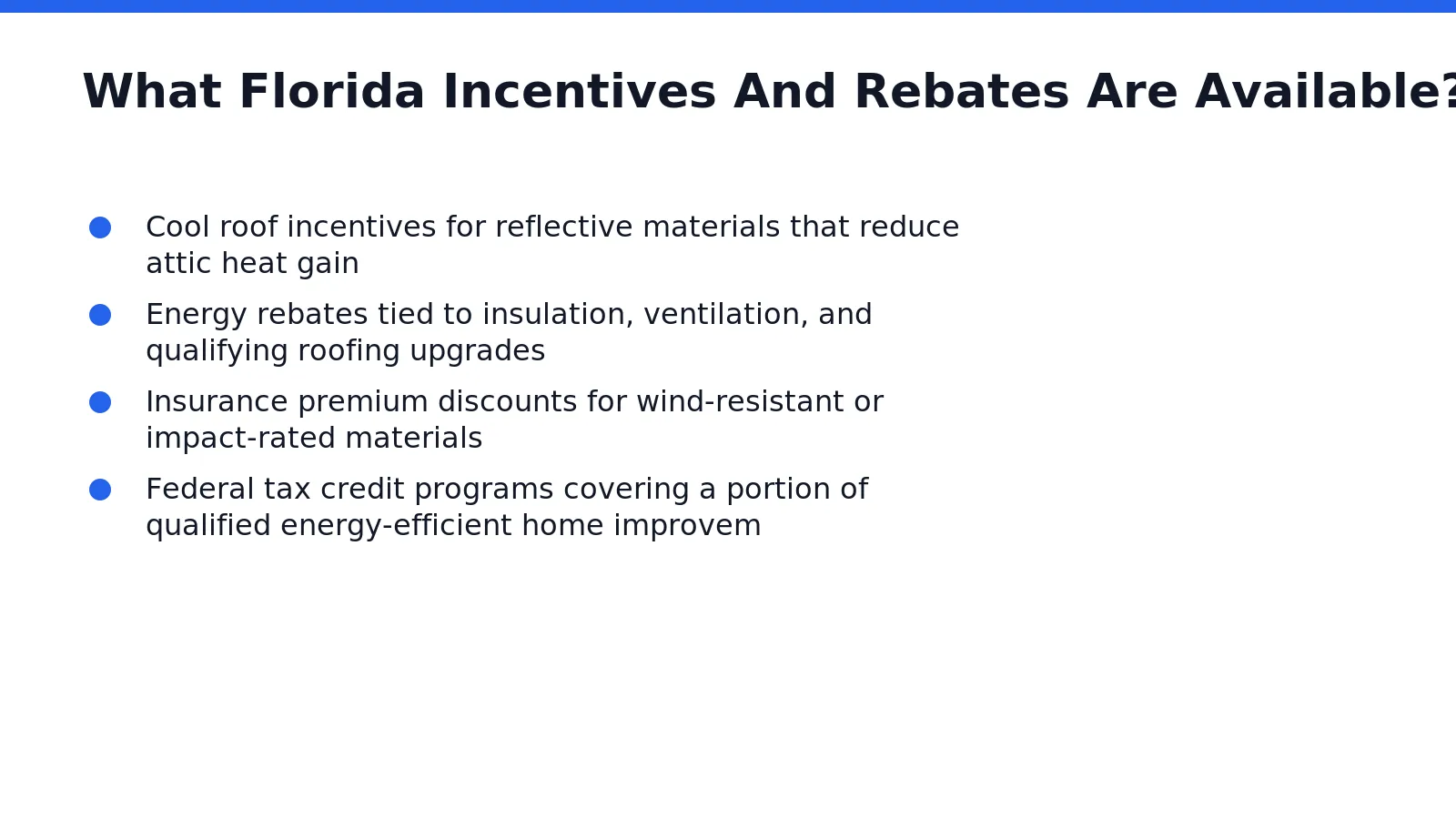
What Florida Incentives And Rebates Are Available?
Florida property owners replacing a roof often qualify for tax credits, rebates, and insurance savings that reduce upfront project costs. Choosing a reflective or high-performance roofing system unlocks additional savings while strengthening a structure against the state’s hurricanes, heat, and heavy rain. Licensed under CCC1331511, E2 Roofing helps Florida clients document eligible upgrades. Those savings hold up during claims or tax filing season.
Several categories of savings apply to Florida roof replacements:
- Cool roof incentives for reflective materials that reduce attic heat gain
- Energy rebates tied to insulation, ventilation, and qualifying roofing upgrades
- Insurance premium discounts for wind-resistant or impact-rated materials
- Federal tax credit programs covering a portion of qualified energy-efficient home improvements
What does a roofing incentives guide actually cover?
A solid incentives guide explains which programs apply to a given property type, how material choice affects long-term return, and what documentation insurers or tax preparers require. Metal and other reflective systems often carry different incentive eligibility than standard asphalt, so matching material to program matters.
Do these programs change, and where can owners check current listings?
Incentive listings are not all-inclusive and shift as agencies update funding. Property owners should confirm details directly with each program before relying on them. The DSIRE database offers a broader search for additional state and utility rebates. For scheduling flexibility during roof work, E2 Roofing will cover the cost of pet daycare, keeping the process stress-free for the whole household.
How Can Florida Homeowners Claim These Savings?
Claiming energy tax credits starts with a licensed roof replacement that meets efficiency requirements. Florida property owners work with a roofing provider whose credentials support the documentation insurers and tax preparers require. E2 Roofing, license CCC1331511, brings over 50 years of combined team experience to replacements built for these credits, giving Florida homeowners paperwork they can rely on.
A practical incentives guide breaks the process into a few concrete steps:
- Schedule a free roof inspection to confirm current condition and replacement eligibility.
- Select a reflective or solar-rated system that meets thresholds tied to cool roof incentives.
- Keep contractor invoices and material specification sheets for filing season.
- Consult a tax professional to confirm which energy rebates apply to the finished project.
What Documentation Do Homeowners Need for Tax Credits?
Itemized invoices, product spec sheets, and proof of installation date form the core file. E2 Roofing’s licensed, insured crews document replacements on homes and commercial buildings across Florida, operating from Jacksonville, FL to serve communities throughout North Florida.
Replacing a roof disrupts daily routines. To ease that burden, E2 Roofing’s team will cover the cost of pet daycare during larger projects, one less worry for families living through an active job site.
FAQ
How much do federal tax credits cover for cool roof upgrades in Florida?
Federal tax credits cover 30% of qualified energy-efficient roof upgrade costs, with combined energy efficiency credits reaching up to $3,200 when multiple qualified improvements complete in one tax year.
When must a Florida homeowner install a roof to qualify for the credit?
Homeowners claim credits for qualified improvements installed after January 1, 2023 through December 31, 2025. The credit applies to the tax year the upgrade was finished, not when it was planned or contracted.
Who helps Florida homeowners maximize these roofing incentives?
E2 Roofing, serving Jacksonville and North Florida, helps homeowners select energy-efficient systems and document eligible upgrades. The company holds Florida license CCC1331511.
Conclusion
In closing, investing in an energy-efficient cool roof represents a smart decision for Jacksonville homeowners seeking to reduce energy costs while supporting environmental sustainability. By understanding available tax credits and incentives, you position yourself to maximize the financial benefits of this upgrade. The combination of lower utility bills, enhanced home comfort, and potential tax advantages makes cool roofing a worthwhile consideration for your property’s long-term value and performance.