Fall and winter roof preparation in Jacksonville starts with a proactive inspection before El Niño’s strengthening weather arrives. E2 Roofing, a veteran-owned company with over 50 years of combined experience, recommends checking for loose shingles, clearing debris, and ensuring proper ventilation to prevent moisture damage during the wetter season.
Key Takeaways for Jacksonville Fall and Winter Roof Prep
- Jacksonville’s fall and winter deliver cooler temperatures and heavier rainfall that worsen existing roof problems.
- Cooler temperatures cause roofing materials to contract, widening tiny cracks and loosening seals around flashing and vents.
- A strong El Niño raises the risk of heavy rain and wind across Northeast Florida, multiplying stress on aging or damaged roofs.
- Neglected debris traps moisture against shingles for months, accelerating granule loss and rot.
Why prepare your roof for Jacksonville fall and winter?
The end of hurricane season does not eliminate weather-related roofing concerns for Northeast Florida homeowners. Small vulnerabilities left unaddressed in autumn become expensive emergencies when winter storms arrive. A roof that survives summer heat often fails under the persistent moisture and wind of the colder months.
What weather threats does a Jacksonville roof face in fall and winter?
Cooler temperatures cause roofing materials to contract, creating tiny cracks and gaps. Heavier rainfall exploits these openings, channeling water into the underlayment and attic spaces. NOAA’s Climate Prediction Center reported in September 2026 that El Niño is strengthening, with a greater than 90% chance of becoming a very strong event during the Northern Hemisphere fall and winter. A strong El Niño raises the risk of heavy rain and wind across Northeast Florida, multiplying the stress on aging or damaged roofs.
How does seasonal maintenance prevent costly roof damage?
Proactive fall roof maintenance Jacksonville inspections catch problems before moisture penetrates the decking. Homeowners who winterize roof Florida properties properly avoid the structural rot and mold growth that follow undetected leaks. A thorough roof winter maintenance checklist addresses loose shingles, clogged gutters, and worn sealant, each a potential entry point for water. E2 Roofing has served Jacksonville since its founding with veteran- and woman-owned craftsmanship and over 50 years of combined industry experience. We have earned the confidence of thousands throughout Jacksonville. The nearby areas by providing long-lasting roof repairs and replacements. Well as specialized services for roof ventilation and sealing, gutters, siding, and skylights.
Pre-hurricane roof prep extends beyond summer. Fall storms carry wind gusts that tear loose flashing and drive rain sideways under shingle edges. Homeowners who prepare roof for storms Jacksonville style, with reinforced seals and cleared drainage paths, reduce the likelihood of interior water damage by addressing vulnerabilities before the weather turns severe.
What tools and skills do you need to start?
A thorough fall roof maintenance jacksonville project begins with the right equipment and a sharp eye for damage. Homeowners who skip preparation risk missing early warning signs that winter rains will exploit. A professional roof inspection identifies weaknesses before seasonal weather exposes them, according to industry guidance from Alan Taylor Roofing. E2 Roofing offers free inspections where a representative provides a detailed assessment and shares photos of any areas of concern.
What basic tools are required for DIY roof maintenance?
The essential toolkit includes a sturdy extension ladder, a leaf blower or stiff broom, a gutter scoop, and a garden hose. A ladder provides safe access to the roof perimeter. The blower or broom clears debris from valleys and edges. A gutter scoop removes compacted leaf matter that blocks water flow. The garden hose tests drainage after cleaning is complete.
What visible signs indicate a roof needs professional attention?
Homeowners should watch for ceiling stains on interior surfaces, missing shingles, discoloration, or bald spots on the roof itself. These symptoms signal active leaks or material failure. Any one of these issues warrants an immediate call for a roof inspection in Jacksonville. E2 Roofing documents every finding with photographs so property owners see exactly what requires repair.
A methodical roof winter maintenance checklist combines these observation skills with consistent seasonal cleaning. Neglected debris traps moisture against shingles for months. That trapped moisture accelerates granule loss and rot. Jacksonville homeowners who act before temperatures drop prevent small defects from becoming expensive emergencies.
How do you clear debris and check gutters first?
Clearing debris and checking gutters is the essential first step in fall roof maintenance jacksonville homeowners must complete before winter arrives. Leaves, pine needles, and twigs pile up fast in Northeast Florida, blocking water flow and trapping moisture against roofing materials. Without prompt removal, these blockages cause water to back up under shingles and seep into the home’s structure.
What tools make gutter cleaning safer and faster?
A sturdy extension ladder, heavy-duty gloves, a plastic scoop, and a garden hose with a spray nozzle handle most residential gutter cleaning jobs. Jacksonville’s abundant oak and pine trees drop debris that packs tightly into channels. A narrow trowel dislodges compacted material without scratching metal gutter surfaces. Safety goggles protect against dust and flying particles common in dry fall conditions.
How do you confirm downspouts are clear after cleaning?
Running water through each downspout reveals hidden clogs deeper in the drainage system. Water should exit freely at ground level within seconds. Slow drainage or gurgling sounds signal a partial blockage that requires immediate attention. E2 Roofing provides gutter services to maintain proper water drainage and keep every element of a building’s exterior in prime condition.
Follow these steps for thorough debris removal:
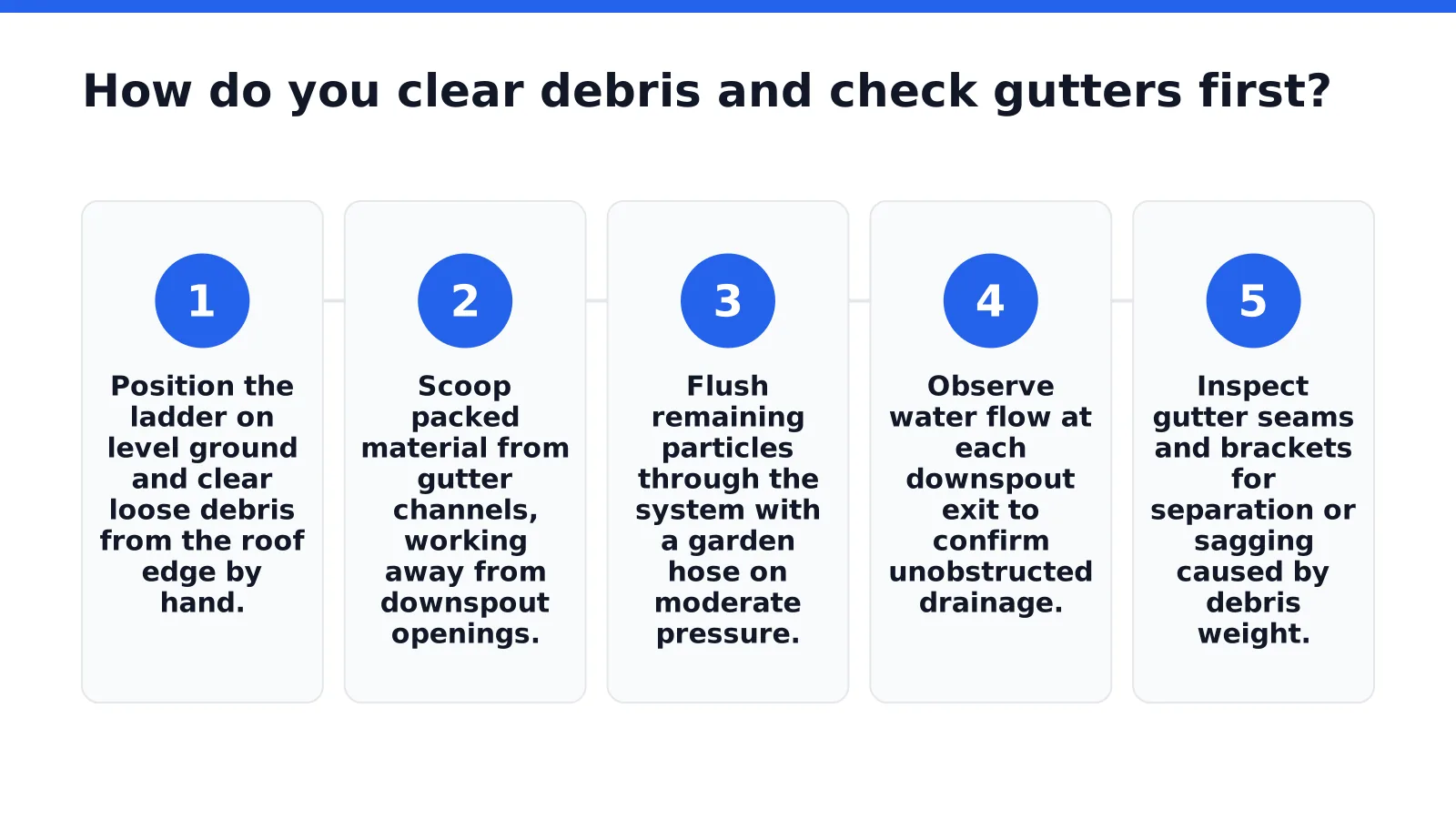
- Position the ladder on level ground and clear loose debris from the roof edge by hand.
- Scoop packed material from gutter channels, working away from downspout openings.
- Flush remaining particles through the system with a garden hose on moderate pressure.
- Observe water flow at each downspout exit to confirm unobstructed drainage.
- Inspect gutter seams and brackets for separation or sagging caused by debris weight.
Jacksonville homeowners preparing for seasonal storms benefit from professional inspection after DIY cleaning. The company’s team checks for hidden damage that compromised gutters often conceal. Proper drainage protects fascia boards, soffits, and foundation walls from costly water damage throughout Florida’s wet winter months.
What steps should you follow to winterize your roof?
Winterizing a roof in Jacksonville protects against heavy seasonal rains and prevents small issues from becoming expensive water damage. A systematic approach addresses shingles, flashing, ventilation, sealants, and surrounding vegetation before cooler, wetter weather arrives.
What does a roof winter maintenance checklist include for Florida homes?
A practical checklist starts with a thorough visual inspection. Damaged or missing shingles demand immediate replacement. Even minor leaks or damaged shingles lead to costly repairs if left unchecked, according to QDRUSA’s residential roofing guidance. Next, examine roof flashing around chimneys, vents, and skylights. Gaps or rust in these metal transitions create direct pathways for water intrusion during Jacksonville’s winter downpours. The inspection also covers attic ventilation systems, which reduce moisture buildup when outdoor temperatures drop.
- Replace cracked, curled, or missing shingles across the entire roof surface.
- Inspect and reseal flashing at every roof penetration, including vent pipes and skylights.
- Verify attic ventilation is unobstructed and functioning correctly.
- Apply a protective roof sealant to guard against prolonged rain exposure.
- Trim overhanging branches that scrape shingles or drop debris into gutters.
How does attic ventilation help winterize a roof in Florida?
Cooler months bring temperature swings that generate condensation inside attic spaces. E2 Roofing installs and services roof ventilation systems specifically to combat this moisture accumulation. Proper airflow prevents damp insulation, mold growth, and decking rot that compromise a roof’s structural integrity. Without adequate ventilation, trapped humidity weakens roofing materials from the underside long before exterior damage becomes visible.
Why are roof sealants important for Jacksonville’s winter rains?
Florida’s winter storms deliver sustained, driving rain that tests every seam and fastener on a roof. Applying roof sealants provides an extra layer of protection against this relentless moisture. E2 Roofing offers professional roof sealant application as part of a comprehensive maintenance program. The sealant bonds to existing roofing materials and creates a watertight barrier that sheds rain efficiently. Homeowners who skip this step risk slow leaks that go unnoticed until ceiling stains or drywall damage appear.
Tree maintenance completes the winterization process. Overhanging limbs scrape against shingles during high winds and deposit leaves that trap moisture. Trimming branches back from the roofline eliminates both abrasion damage and the organic debris that clogs gutters. Clean gutters then channel Jacksonville’s heavy winter rainfall safely away from the foundation.
What common mistakes should you avoid this season?
Jacksonville homeowners make several costly errors when preparing roofs for fall and winter. Avoiding these mistakes prevents water damage, extends roof life, and eliminates emergency repair bills. The most dangerous misstep is assuming winter roof maintenance is unnecessary simply because Jacksonville lacks snow and ice. That assumption is a misconception. Cooler temperatures paired with heavier seasonal rainfall exacerbate existing roof problems, turning minor vulnerabilities into major leaks.
Why is skipping winter roof maintenance a risk in Florida?
Winter in Jacksonville brings cooler weather and increased rainfall, not snow. A residential roofing contractor report confirms that these conditions worsen existing roof damage. Homeowners who skip seasonal inspections lose the opportunity to catch small issues before water infiltration begins. The cost of neglect compounds quickly once moisture penetrates the underlayment.
What happens when post-storm repairs are delayed?
Delaying repairs after a hurricane or tropical storm invites extensive water damage. A small leak left unattended expands as rain continues through fall and winter. E2 Roofing provides same-day emergency service and upfront estimates, removing any reason to wait. Homeowners who postpone action often face structural rot and interior damage that far exceeds the original repair cost.
Follow these steps to avoid the most common seasonal mistakes:
- Schedule a professional fall roof maintenance Jacksonville inspection before cooler weather arrives. A thorough assessment identifies loose shingles, worn flashing, and debris accumulation.
- Complete all pre-hurricane roof prep tasks early. Secure loose materials, clean gutters, and verify that sealants remain intact around vents and skylights.
- Winterize roof Florida systems by confirming adequate attic ventilation and insulation. Proper airflow prevents moisture buildup when temperature swings occur.
- Use a roof winter maintenance checklist to track gutter cleaning, downspout clearance, and sealant reapplication. Consistent documentation helps homeowners prepare roof for storms Jacksonville season after season.
- Verify contractor credentials before hiring. Florida roofing licenses begin with the prefix “CCC,” and homeowners can confirm active licensure through the Florida Department of Business and Professional Regulation. Unlicensed contractors put property and financial security at risk.
E2 Roofing’s roof maintenance program includes biannual inspections and advanced drone assessments that catch problems early. Proactive care keeps small issues from becoming emergencies. Jacksonville homeowners who act before winter rainfall intensifies protect their homes from preventable damage and costly repairs.
FAQ
Why prepare your roof for Jacksonville fall and winter?
Jacksonville’s fall and winter deliver cooler temperatures and heavier rainfall that worsen existing roof problems. A strong El Niño raises the risk of heavy rain and wind across Northeast Florida.
How does seasonal maintenance prevent costly roof damage?
Proactive fall roof maintenance inspections catch problems before moisture penetrates the decking. Homeowners who winterize their roof properly avoid the structural rot and mold growth that follow undetected leaks.
Conclusion
Jacksonville homeowners who complete these fall and winter roof preparation steps protect their homes from the heavier rainfall and temperature swings that define the season. Scheduling a professional inspection, confirming attic ventilation, applying roof sealants, and trimming overhanging branches eliminate the vulnerabilities that lead to costly emergency repairs. Acting now prevents small issues from becoming structural damage when winter storms arrive.