
Tracing a roof leak requires a systematic approach: inspect the attic for water trails, check flashing and damaged shingles, then test with a hose. E2 Roofing, a veteran-owned Jacksonville company with over 50 years of combined experience, recommends professional inspections to confirm elusive sources before mold and structural damage occur.
Key Takeaways
- Water often travels along decking, rafters, and insulation before dripping through a low point inside the home.
- A ceiling stain marks the exit point of water, not the entry point on the roof.
- Tracing moisture uphill through the attic reveals the true entry point of a roof leak.
- Active leaks show clearer moisture trails during or immediately after rainfall.
Why does water travel before leaking?
Water rarely drips straight down through a roof. Water travels sideways along decking, rafters, and insulation due to roof pitch and surface tension before gravity pulls it indoors. A ceiling stain marks the exit point, not the entry point. The actual roof breach often sits several feet away, uphill, in a direction that feels wrong.
This hidden travel path explains why homeowners struggle to find leaks accurately. Water enters at a break in the roofing surface. It then runs along the underside of the deck, tracks down a rafter, crosses an insulation batt, and finally drips through the ceiling wherever it finds a low point. The visible damage inside the home betrays nothing about where the water first penetrated.
How far can water travel from the actual leak source?
Water routinely moves several feet from the original leak sources before staining drywall or dripping into living spaces. The distance depends on roof pitch, insulation density, and the path of least resistance along framing members. A small puncture near the ridge can produce a stain near an exterior wall, misleading anyone who assumes water falls vertically.
What makes diagnosing a roof leak so difficult without professional tools?
Homeowners who try to diagnose leak locations by looking at ceiling stains chase the wrong evidence. The stain shows where water exited, not where it entered. Without tracing moisture backward through the attic, the true breach remains hidden. E2 Roofing offers comprehensive roofing repair and replacement services, roof maintenance programs, ventilation systems, sealants, gutters, siding, and skylight services to address the full scope of exterior protection.
How do you find leaks inside your home?
Finding a roof leak starts indoors, not on the roof. Water stains, peeling paint, and persistent odors signal trouble long before shingle damage becomes visible. Homeowners who act on these early warnings avoid structural decay and expensive repairs.
What are the first signs of a roof leak inside a house?
Interior clues appear well before roof damage catches the eye. Common signs include brown or yellow ceiling stains, bubbling or peeling paint, and musty odors around walls or ceilings. Leaks often reveal themselves indoors long before an issue surfaces on the roof. Identifying these early symptoms saves property owners from larger repairs. Ceiling stains on the interior of a home indicate that a roof replacement may be necessary.
How should a homeowner trace a leak from the ceiling to its source?
Water can change direction once it enters the building envelope. A stain on the living room ceiling might originate from a puncture near the ridge vent. Follow these steps to diagnose leak pathways:
- Mark the visible stain with painter’s tape and measure its distance from two fixed walls.
- Enter the attic with a flashlight and locate that same spot on the underside of the decking.
- Trace moisture uphill along rafters, insulation, and decking seams until the entry point appears.
- Check directly above that entry point for damaged flashing, cracked sealant, or missing shingles.
The goal is finding the entrance, not just the exit. Water follows framing and insulation before dripping through a low point. Chasing the stain solves almost nothing. Following the water’s path solves the problem.
When should a homeowner call a professional for leak detection?
Persistent musty odors without visible stains suggest hidden moisture behind walls or above ceilings. E2 Roofing provides free inspections for Jacksonville homeowners who spot ceiling stains, missing shingles, or discoloration. The company’s team brings over 50 years of combined experience to every find leaks investigation. Delaying a professional assessment allows mold growth and decking rot to spread unchecked.
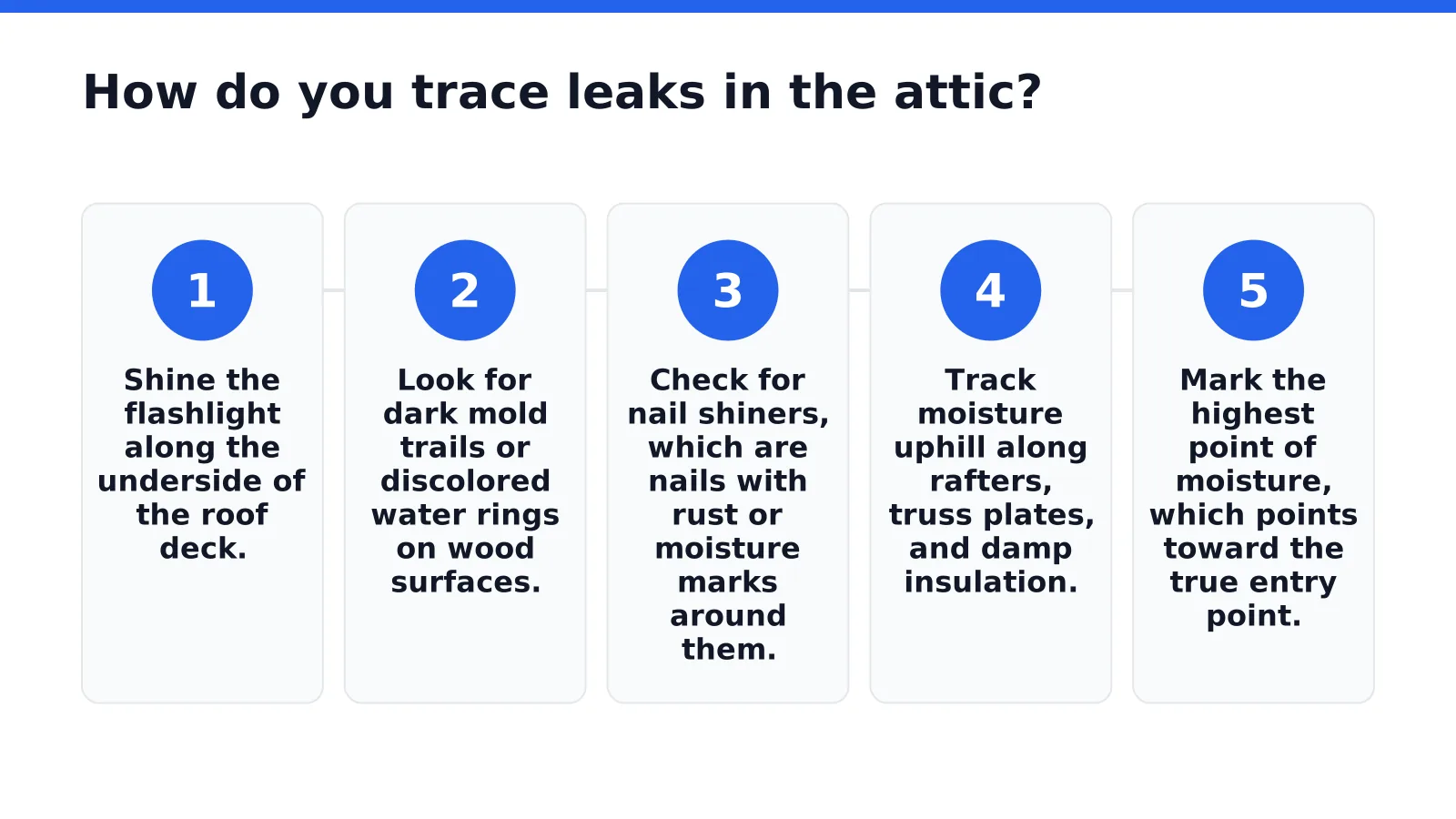
How do you trace leaks in the attic?
The quickest way to detect roof leaks is to trace moisture indoors and examine the attic for signs of water entry. Attic inspection reveals what ceiling stains hide. Water travels along decking, rafters, and insulation before dripping through a low point inside the home.
Homeowners should start with a flashlight and patience. The goal is finding the entrance, not just the exit point.
What should homeowners look for first in the attic?
Begin with visible markers of water travel. Use a flashlight to spot mold trails, nail shiners, and water rings that indicate the path of water movement. These marks often appear several feet away from the interior stain.
Follow this sequence for tracing attic leaks:
- Shine the flashlight along the underside of the roof deck.
- Look for dark mold trails or discolored water rings on wood surfaces.
- Check for nail shiners, which are nails with rust or moisture marks around them.
- Track moisture uphill along rafters, truss plates, and damp insulation.
- Mark the highest point of moisture, which points toward the true entry point.
Why does the leak appear far from the attic damage?
Water does not fall straight down through a building. It enters at a break, follows the underside of the deck, tracks down a rafter, crosses an insulation batt, and drips through the ceiling wherever it finds a low point. The stain marks the exit. Finding the entrance requires tracing the moisture path backward and uphill.
E2 Roofing recommends examining the attic before rain stops. ## When should you call a professional roofer?
Professional roofers should be called when a homeowner cannot confidently diagnose leak origins or when interior stains appear without an obvious exterior cause. Water can shift direction through decking and insulation before exiting at a ceiling stain far from the actual entry point. Delaying expert intervention allows moisture to spread, multiplying repair costs and threatening structural integrity.
What signs indicate a leak is beyond DIY repair?
Several warning signs point toward professional help. Stains that reappear after a homeowner patches an area suggest the true leak sources remain hidden. Multiple interior water spots appearing simultaneously often mean widespread roof damage. Sagging drywall or peeling paint near ceiling stains signals advanced moisture saturation that requires immediate attention.
How does a professional inspection differ from a homeowner’s check?
A professional inspection provides certainty when visual clues are confusing. Homegenius Exteriors notes that scheduling a professional inspection is one of the most reliable ways to confirm the source when a homeowner is unsure what they are seeing. E2 Roofing’s licensed and insured team brings 50+ years of collective experience to every job, handling everything from find leaks diagnostics to replacing hail-damaged materials. The company offers a free roof inspection where a representative performs a detailed evaluation and shares photos of any areas of concern. This documented evidence gives property owners clarity before committing to repairs.
FAQ
Why does water travel before leaking?
Water often travels along decking, rafters, and insulation before dripping indoors. It can move several feet from the entry point. The distance depends on roof pitch, insulation density, and framing members.
Conclusion
Tracing a roof leak requires patience and a systematic approach, but the effort pays off when you find the true entry point rather than just the ceiling stain. Once you identify the source, you can make informed decisions about repairs or professional help. Acting quickly on your diagnosis prevents moisture from spreading, protecting your home from structural damage and costly repairs down the road.