Jacksonville homeowners facing roofing questions should watch for water stains, missing shingles, or mold after heavy tropical rains. A full replacement is recommended when over 25% of the roof is damaged. E2 Roofing: Trusted Woman- and Veteran-Owned Roofers in North Florida… We are a woman- and veteran-owned organization that has rapidly become one of North Florida’s most trusted roofing companies. With over 50 years of combined industry experience, our team has the knowledge and skill to provide results that look great and last long.
Key Takeaways
- Jacksonville’s subtropical climate shrinks a standard asphalt shingle roof’s lifespan from 20–25 years to 15 years when maintenance lags.
- A full roof replacement is recommended when over 25% of the roof is damaged, per Roof Bear Jacksonville.
- Twice-yearly inspections, in spring and fall, catch winter storm damage and prepare for hurricane season.
- Water stains on ceilings or walls after heavy tropical rains indicate active roof penetration requiring immediate action.
How long does a roof last in Jacksonville?
A roof in Jacksonville lasts 20 to 25 years when built with standard asphalt shingles. That lifespan shrinks fast under Florida’s subtropical assault of heat, humidity, salt air, and hurricane winds. Homeowners who ignore early warning signs risk structural water damage that multiplies repair costs. The roofing faq jacksonville residents ask most often centers on this exact tension between expected longevity and real-world wear.
What shortens a roof’s life in Jacksonville’s climate?
Jacksonville’s weather punishes roofing materials year-round. Summers push temperatures high, and afternoon thunderstorms from June through November dump heavy rain in minutes. Salt air accelerates corrosion on fasteners and flashing. High winds lift shingle edges, creating entry points for moisture. These forces turn a 25-year shingle into a 15-year liability when maintenance lags.
How do homeowners know a roof is failing?
Visible damage tells the story. Ceiling stains appear after heavy tropical rains. Missing shingles, discoloration, and bald spots signal that materials have begun to fail. Among common roofing questions, the threshold for action surprises many property owners. A full replacement is generally recommended if over 25% of the roof is damaged, per Roof Bear Jacksonville. That benchmark lets homeowners use modern materials with superior heat resistance and long-term protection. E2 Roofing provides roof replacement services in Jacksonville that address damage at any scale.
How often should a roof inspection happen?
Twice a year works for most Jacksonville homes. A spring check catches winter storm damage. A fall inspection prepares the roof for hurricane season’s peak. These roofing quick answers prevent small leaks from becoming structural failures. Professional inspectors spot granule loss, sealant cracks, and flashing gaps that homeowners miss from the ground.
What should I do when my roof leaks?
A roof leak demands immediate action to prevent structural damage and mold growth, and knowing what to do when roof leaks is essential. Jacksonville homeowners should watch for water stains on walls or ceilings after heavy tropical rains. Missing shingles, mold, or worn covers signal trouble that worsens fast in North Florida’s humidity.
The first step is damage control inside the home. Place a bucket under the active drip and move furniture away from the affected area. Water spreads quickly through drywall and insulation. A small stain often hides a larger problem above the ceiling.
How can I tell if a leak is serious?
Water stains that appear after Jacksonville’s afternoon thunderstorms indicate active roof penetration. Even a faint discoloration means moisture is entering the building envelope. Left unaddressed, that moisture feeds mold colonies quickly. The age of the roof matters greatly in this climate, where heat and humidity accelerate material breakdown.
Should I call a professional for a small leak?
A professional evaluation is the safest course when any leak appears. If a homeowner notices a leak, missing or damaged shingles, water stains, or storm damage, contacting a qualified contractor prevents costly repairs later. E2 Roofing provides roof leak repair services that include a free inspection. A representative conducts a detailed assessment and shares photos of any areas of concern.
Common warning signs Jacksonville residents encounter include:
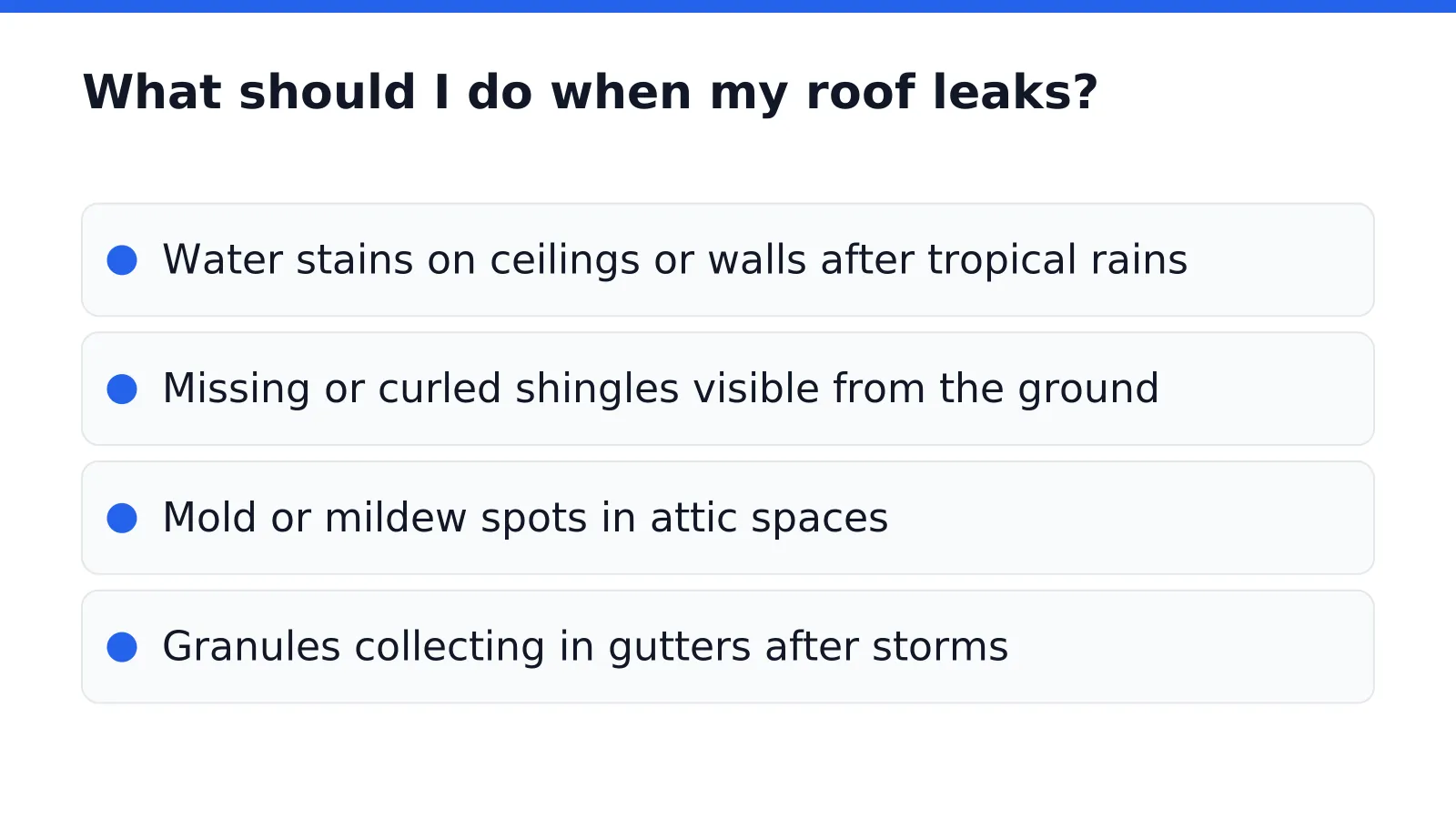
- Water stains on ceilings or walls after tropical rains
- Missing or curled shingles visible from the ground
- Mold or mildew spots in attic spaces
- Granules collecting in gutters after storms
Temporary fixes like tarps offer short-term protection. They do not replace a permanent repair. Jacksonville’s summer storm pattern, with inches of rain falling in minutes, punishes even small vulnerabilities. A professional inspection identifies hidden damage before the next heavy downpour turns a minor issue into a major claim.
How often inspect roof?
Jacksonville homeowners need roof inspections twice each year. A spring check catches winter storm damage, while a fall inspection prepares the roof for hurricane season. Skipping either one leaves hidden vulnerabilities that worsen under Florida’s relentless sun and heavy rains.
What happens during a professional roof inspection?
A thorough inspection examines shingles, flashing, gutters, and ventilation components. The team brings over 50 years of combined industry experience to identify problems most homeowners miss. Small cracks and lifted materials often go unnoticed from the ground. These minor defects expand rapidly in Jacksonville’s subtropical climate, turning a simple repair into a full replacement.
Does a roof inspection require a building permit?
Routine inspections do not require permits. However, any repair or replacement work that follows must comply with local regulations. The Jacksonville Building Inspection Division states that a building permit is required by law to establish the minimum requirements to safeguard the public health, safety and general welfare. Licensed contractors handle this process, ensuring all work meets code before the first shingle comes off.
Common roofing questions about inspection frequency often overlook seasonal threats. Jacksonville’s summer thunderstorms pound roofs with wind-driven rain from June through November. A roof maintenance program adds structured protection between these seasonal checks. Regular inspections combined with ongoing maintenance catch deterioration early. The result is fewer emergency calls and longer roof life. Homeowners who wait for visible leaks inside the house already face structural damage behind walls and ceilings.
FAQ
How long does a roof last in Jacksonville?
A roof in Jacksonville lasts 20 to 25 years with standard asphalt shingles, but the lifespan shrinks to 15 years when maintenance lags.
How do I know my roof is failing?
Water stains on ceilings or walls after heavy tropical rains, missing shingles, discoloration, and bald spots signal roof failure.
How often should I inspect my roof in Jacksonville?
Twice-yearly inspections in spring and fall catch winter storm damage and prepare the roof for hurricane season.
Conclusion
Jacksonville homeowners who act on these warning signs and schedule regular inspections protect both their investment and their family’s safety. A proactive approach to roof maintenance prevents the costly cycle of emergency repairs and premature replacement that plagues properties in this climate. The decision to address small issues today keeps a roof performing through the storms ahead.